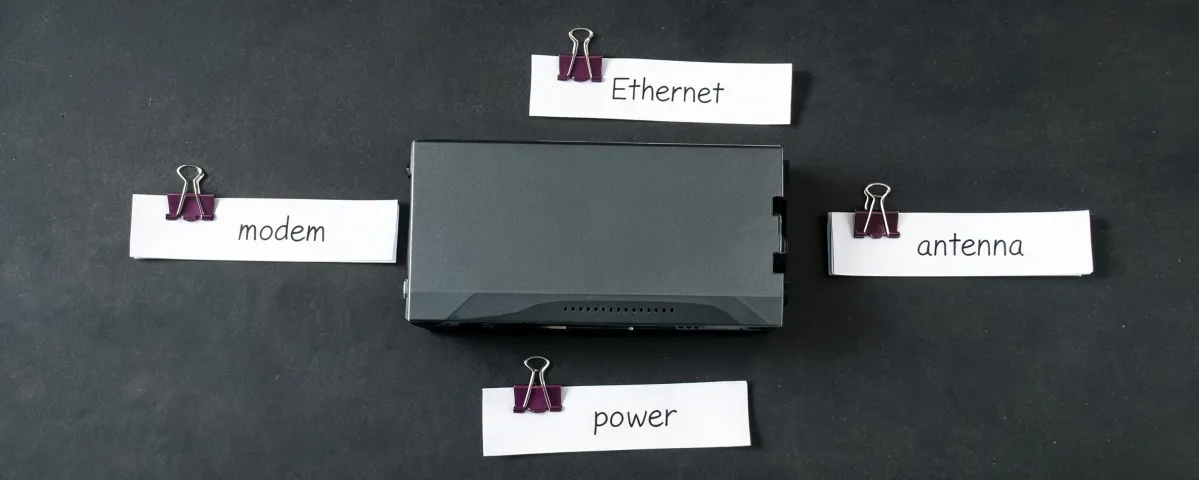
Lifecycle matrix for one router release
| Line | Specify | Verify before accepting an alternative | Hold if missing |
|---|
| Modem | Bands, MIMO, UE category question | Datasheet row for the substitute model | Band table or category claim without conditions |
| Ethernet | Port count, port speed, Category 6 plant yes or no | Port map and jack type | Photo of a jack with no speed |
| Antenna | Connector, gain if known, cable loss | VSWR or return-loss note if the factory supplies one, plus impedance | Kit priced inside the chassis with no part code |
| Power | DC range or Power over Ethernet watts | Input connector and draw at the stated load | Switch nameplate used as the router budget |
| Software | VPN, management, license term | Whether the seat transfers to the new model | Cloud login assumed free |
Specification choices that often stay open
Buyers frequently have not closed dual-SIM versus single-SIM, 2x2 MIMO versus a higher layer count, or a metal DIN-rail shell versus a lighter enclosure. Write the preferred side and the acceptable alternative. Frequency range should list the bands the carrier letter names, not every band printed on a regional brochure. Channel width is a radio-condition question: ask which width the throughput figure used.
Impedance for many cellular antennas is stated as 50 ohm, but confirm it on the proposed antenna, not from memory. Gain in dBi and the radiation pattern matter when the cabinet face points away from the tower. Insertion loss on a 5 m or 10 m jumper can erase a 2 dBi to 5 dBi gain figure, and return loss or VSWR belongs on the antenna row when the factory can supply it. Those numbers are questions, not values this page assigns to a model. An optical budget does not apply unless the handoff is fiber rather than the cellular radio.
OEM-coded modem versus a compatible module
An OEM-coded assembly may follow the vendor’s support policy more directly. A compatible module may widen the factory list if the host firmware, band set, and regulatory file are checked for that exact pair. Neither side is a default. The workflow stores the choice as a line, with the evidence the factory attaches. A standard overview is not that evidence.
What to verify before an alternative is accepted
- Manufacturer, model, and revision changed or unchanged.
- Bands, MIMO, and antenna connector restated, not waved through.
- Port count and port speed restated.
- Power input and watt draw restated at a named condition.
- License, SIM lock, and warranty months restated.
- FCC equipment authorization identifier, when the rule applies, matching the new model.
If any bullet is blank, the alternative stays in the hold column. LinkScope Sourcing 19 will not convert a blank into a pass. The configuration list and the requirement form are the places to park the open lines. The article shows a longer attribute list for network equipment, including switching capacity when the router also fans out several LAN devices.
Procurement scenario: a substituted revision at quote time
Background: the brief asked for an industrial cellular lte router with two SIM sockets and a 24 V input, quantity 15, destination Ohio, budget marked USD per unit and still unaccepted. Process: one factory replies with a single-SIM revision and a lower chassis figure. Result: the comparison keeps the original line and the substitute on separate rows, asks for the band table and the input range, and does not fold the lower figure into a savings claim.